What Do Rust Stains on a Terra Cotta Cornice Mean?
In this guide
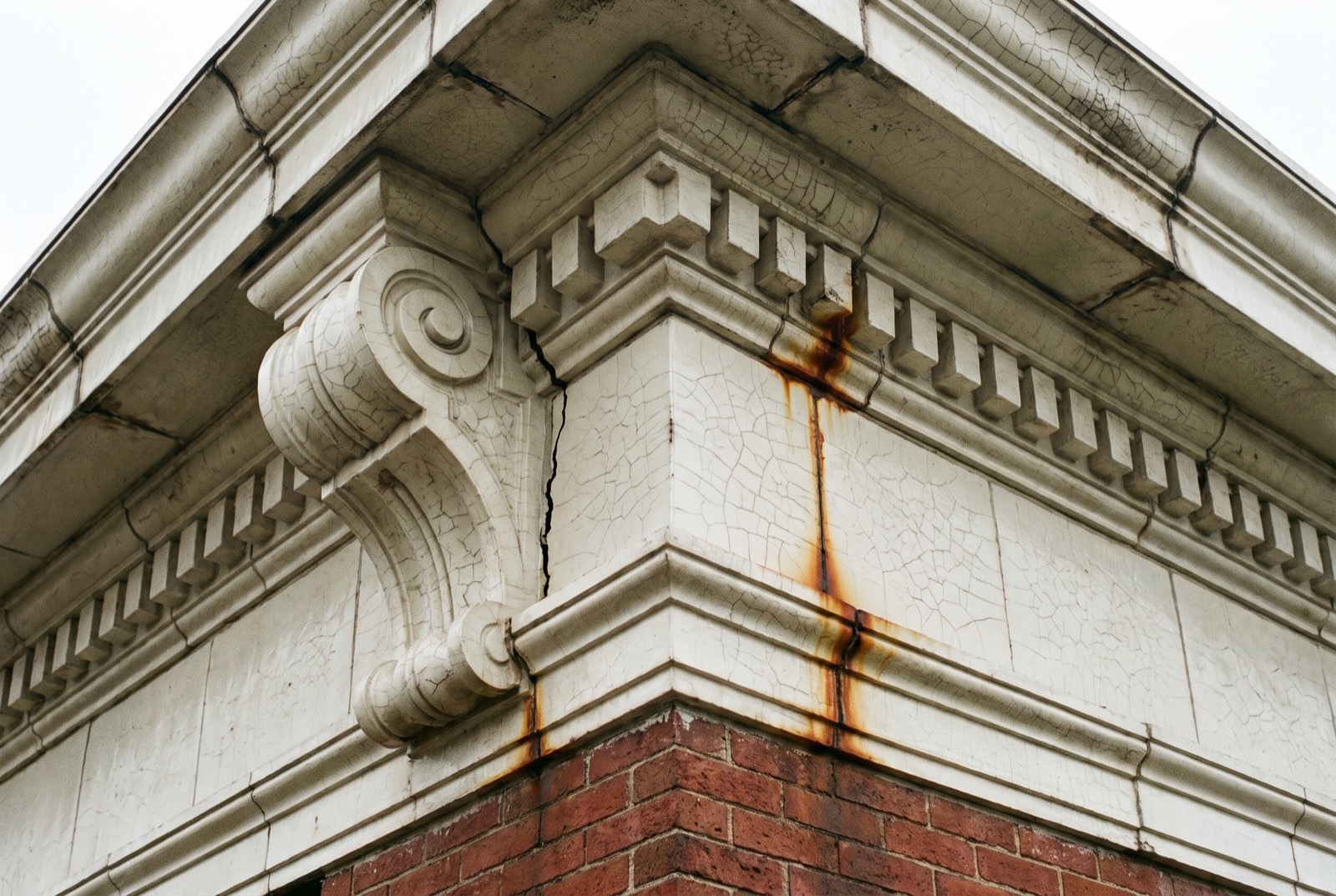
Rust stains on a terra cotta cornice usually mean water has reached steel that is hidden behind the clay. Rusting steel swells, and that can crack the units and push them outward, so the stain is a reason to have the cornice looked at rather than painted over.
Seeing stains on your cornice? See how our cornice inspection works.
What is a terra cotta cornice made of?
Terra cotta is fired clay, usually made as hollow units with a glazed or coated outer face. The units are often held to the wall by metal anchors or by a steel frame inside the masonry. The clay itself is durable. The hidden metal is the weak link, because once water finds it, corrosion begins where nobody can see.
The partner guide on brick, terra cotta, stone and metal cornices describes how each type is built.
Why do rust stains appear?
Water gets in through cracked glaze or open joints, reaches the steel and carries rust back out, where it streaks the face. The stain tells you where water has been traveling. It does not tell you how much metal has been lost or how far the damage extends.
The key point is that the surface can mislead. A piece can look sound while the anchor behind it is not, and a stain may appear some distance from the actual problem.
What do cracked glaze and cracked units suggest?
Glaze is the thin surface layer that sheds water. Once it cracks, water can enter the more porous clay beneath. Fine cracking, called crazing, is not always serious on its own, but cracking that lines up with an anchor location, or a unit that has shifted, suggests that swelling steel may be pushing from inside.
You cannot reliably tell from the ground which cracks are old and stable and which are active. That is a judgment for someone who can examine the cornice and the wall behind it up close.
How does this compare with a brick cornice?
A corbelled brick cornice steps outward in courses held by the wall above. Brick tends to fail through eroded mortar, flaking faces from freeze and thaw, or water pooling at the top. Rust is less often the main story, though anchors and ties can be present. The warning signs are loose bricks, open joints and grit on the sidewalk.
Terra cotta fails differently, because the glaze, the hollow units and the steel behind them interact.
How does it compare with a pressed-metal cornice?
Pressed metal is thin sheet metal formed into decorative shapes and fastened to a wood or steel frame. Many look like masonry from the street. Here the rust is usually in the metal itself, in opened seams and loose fasteners, and the wood behind it can rot where water enters. Sagging, bowing and rust streaks are the usual signs, and the damage often goes deeper than the surface.
The point of comparing them is that the repair differs. Replacing hidden steel is a different job from repointing brick or re-fastening metal.
What should you do about stains now?
- Photograph the cornice from the ground or across the street, with the date.
- Do not climb up, scrape, probe or paint over the stains.
- Keep people from standing under any area that looks cracked or shifted.
- Note whether stains are new, spreading or accompanied by debris below.
A coat of paint or a surface patch can cover metal that is still rusting, and it makes the later diagnosis harder.
How does an engineer assess it?
The engineer identifies the material, examines the cornice and the wall behind it, and explains in writing what is stable and what is not. A cornice condition assessment is designed for that question. If repairs follow, the findings can become a defined scope for contractors.
Where do you start?
Learn more about our cornice inspection, then send the address and photographs of the stains. Rust that keeps returning is a good reason to ask, not to wait.
Need help with a property requirement?
Tell us what your lender, insurer, or project team needs so we can discuss your next step.