Buying an Old St. Louis Building: What About the Cornice?
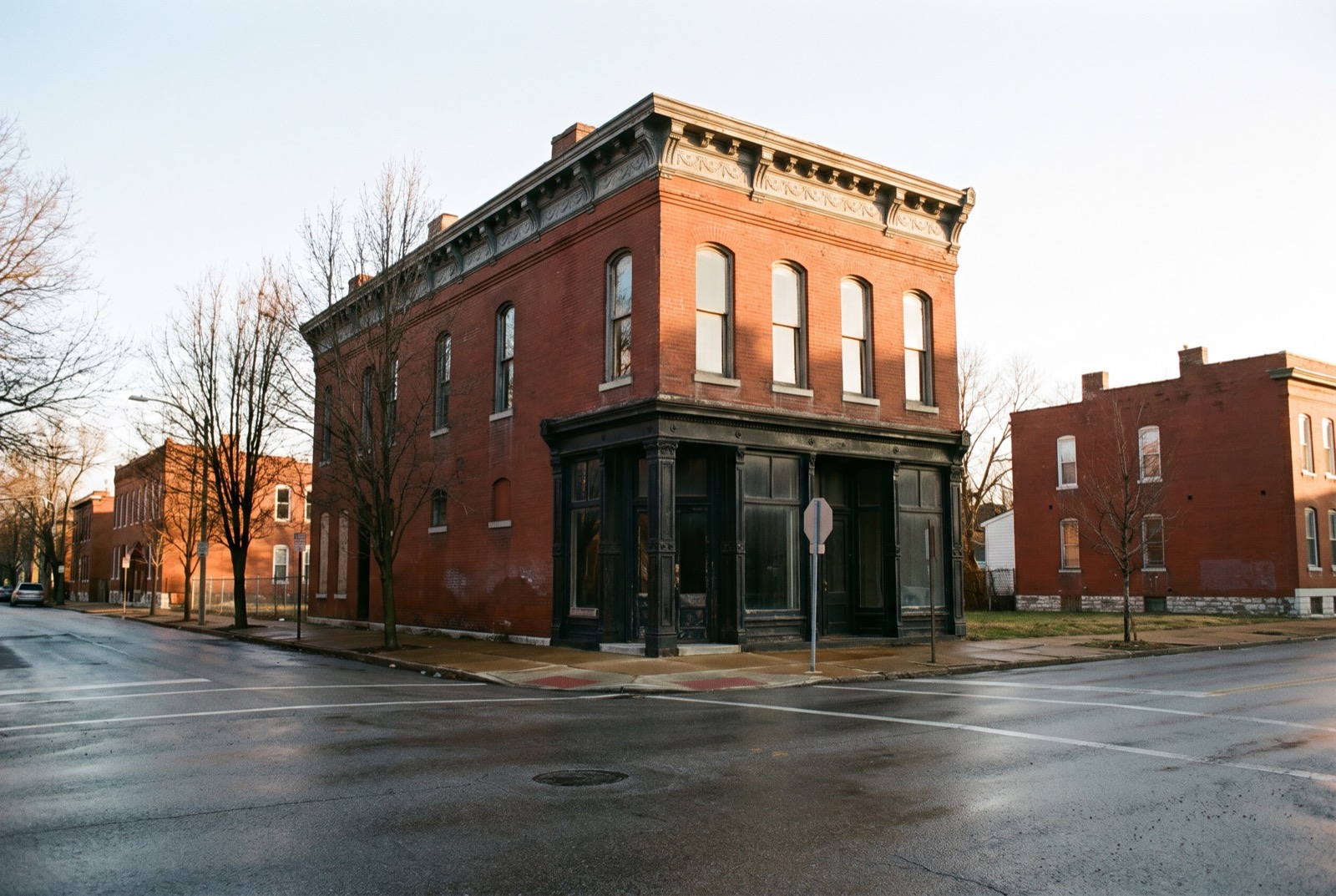
In this guide
Before closing on an older St. Louis building, have someone qualified look at the cornice, the parapet and the masonry along the top of the wall. A general inspection usually sees that part of the building from the ground, so it may not answer whether the roofline is sound or due for costly repair.
Under contract on an older building? See how our cornice inspection works.
Why does the roofline deserve its own look?
The top of a masonry wall is its most exposed part. Roof edge, flashing, coping, cornice and parapet all have to keep water out, and over decades they wear. Damage there often develops slowly and out of sight, and it can be expensive to correct because it needs access and specialized masonry work.
A cornice that is failing can also be a safety issue, particularly over a sidewalk or entrance. Learning that after closing means the problem is yours, along with whatever it takes to fix it.
How does this differ from a general inspection?
A general home or building inspection covers many systems within an agreed standard, and the roofline is one small part of it. Inspectors commonly view the top of a tall wall from the ground or from the roof surface. That is reasonable for a broad survey, but it is not the same as an engineering opinion on cornice and parapet condition.
An engineer's review is narrower and deeper. It asks what the cornice is made of, what condition it appears to be in, what is likely causing any damage, and what deserves a closer look before you commit. The partner guide on cornice inspection before selling or buying covers how both sides of a sale use the result.
What should a buyer ask the seller?
Put these questions in writing during due diligence:
- What is the cornice made of?
- Has anything ever fallen from the building?
- Has the cornice or parapet been repaired, and by whom?
- What records, reports or invoices exist?
- Has the city raised any concern about the exterior?
A repair invoice describes work that was done. It is not a condition report, and a recent patch can hide the cause of an old problem.
What does a pre-purchase facade review look at?
A pre-purchase facade review looks at the visible condition of the cornice, parapet and facade masonry and explains what deserves a closer look. The aim is to give you facts while you still have room to negotiate, schedule more investigation or walk away.
What can be reviewed depends on access. Some work can be done from the ground, and a closer look may need arrangements with the owner. Do not promise roof or upper access to anyone before the owner has agreed.
When should you do it?
As early as the contract allows. A finding that surfaces late in a sale is harder to act on than one raised during the inspection period. If your contract has a due-diligence window, ask your agent or attorney how a separate review fits inside it.
Does it mean repairs before closing?
Not necessarily. That depends on what the review finds and on what the parties agree. Some findings call for no action beyond noting them. Others affect your price, your plans or your timeline, and it is better to know that in advance.
If repair work looks likely, ask the City of St. Louis building and historic-preservation offices, or your own municipality, what applies to the address. Repairs on an older building can involve more than just the contractor's schedule.
What records help most?
Gather what the seller has: earlier engineering or inspection reports, repair invoices, permit and historic-review correspondence, and dated photographs that show whether something has changed. If a lender or insurer has asked for something specific, ask them to name the report they expect so the scope can match.
What is the next step?
Read about our cornice inspection and send the address, a few photos from the street and the question you need answered. For the cornice and parapet specifically, start with the cornice condition assessment.
Need help with a property requirement?
Tell us what your lender, insurer, or project team needs so we can discuss your next step.