Cornice Repair: Should You Call an Engineer or a Mason?
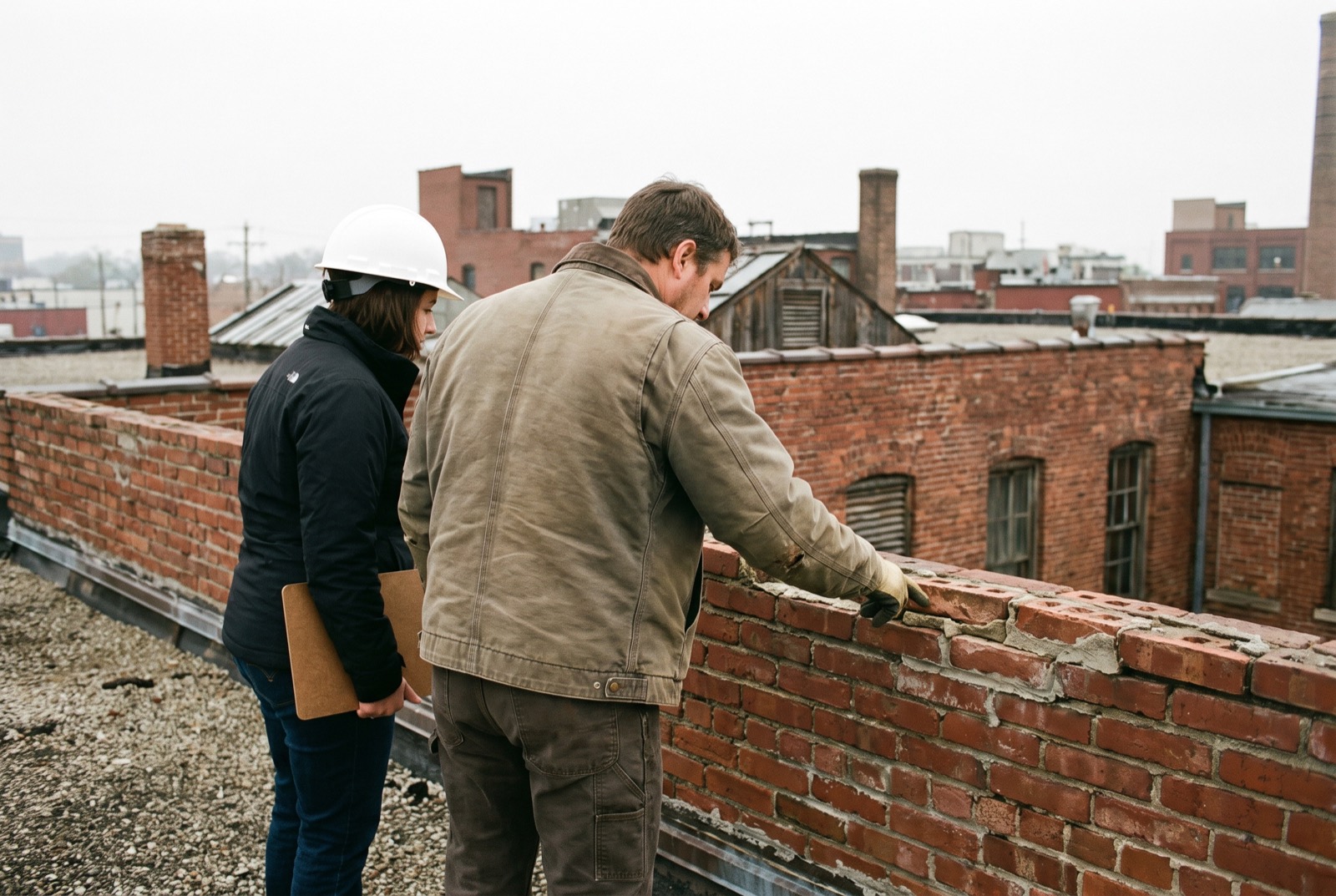
In this guide
Call the engineer first. An engineer finds the cause and writes a repair scope, and every contractor then prices the same defined work. Without that scope, bids tend to describe different jobs, and an owner cannot tell which one is right.
Planning a repair? See how our cornice inspection works.
Why does the order matter so much?
A cornice problem can look like a masonry problem, a roof problem or a metal problem, and the real cause may be somewhere else. Each trade sees it through its own work. A mason may price new mortar where the water is actually entering through failed flashing. A roofer may redo the roof edge while anchors behind the cornice keep rusting.
Nobody is acting in bad faith here. Each is describing the part they know how to fix. The risk is that the owner ends up paying to repair a symptom. The partner guide on who to call first about a cornice explains what each trade does.
What does the engineer do that a contractor does not?
The engineer inspects the cornice and the wall behind it, identifies the material and the cause of the damage, and writes down what should be done. The engineer does not sell or perform repairs, so the recommendation has no work attached to it.
That independence is the point. "Monitor it," "fix the roof edge first" and "rebuild this section" are all fair outcomes of an assessment. A contractor who diagnoses and then bids benefits from the answer. An engineer does not.
How does a written scope keep bids comparable?
A scope lists what work is included, in what areas, using which approach, and what the contractor should do if hidden conditions turn up. When three contractors bid against that document, the differences between their numbers reflect real differences in price, schedule and approach rather than differences in what each one assumed the job was.
Without it, you may receive one bid that replaces a section, another that only repoints and a third that quotes by the day. You cannot compare those, and you may not know what each leaves out. A cornice repair scope is meant to remove that guesswork.
Can a contractor diagnose it for you?
A good one can tell you a lot, and their observations are worth hearing. Treat them as input. Contractors sometimes spot things from the roof that nobody on the ground would see.
What a contractor cannot easily offer is a diagnosis that is separate from a sale. If you have a bid in hand already, bring it to the engineer. The engineer can tell you whether the proposed work fits what the assessment finds. Be cautious about any pressure to sign the same day.
What if something is loose right now?
Keep people out from under it and call. Do not climb up or pull at it. A contractor may reasonably be needed for temporary protection while you wait, but permanent repairs should follow the diagnosis. If material has already fallen, the fallen masonry assessment covers that situation.
What does the sequence look like in practice?
- Photograph the building safely from the ground and gather any earlier bids or reports.
- Have the cornice and the wall behind it assessed so the cause is known.
- Ask the city's building and historic-preservation offices what applies to the scope.
- Have contractors bid against the same written scope.
- Agree on what records you expect when the work is finished.
Steps can overlap, and findings in an early step may change a later one.
How do you begin?
Read about the cornice inspection we offer, and start with the cornice condition assessment when the cause is still unknown.
Need help with a property requirement?
Tell us what your lender, insurer, or project team needs so we can discuss your next step.