What Does a Cornice Inspection Cover on a Brick Building?
In this guide
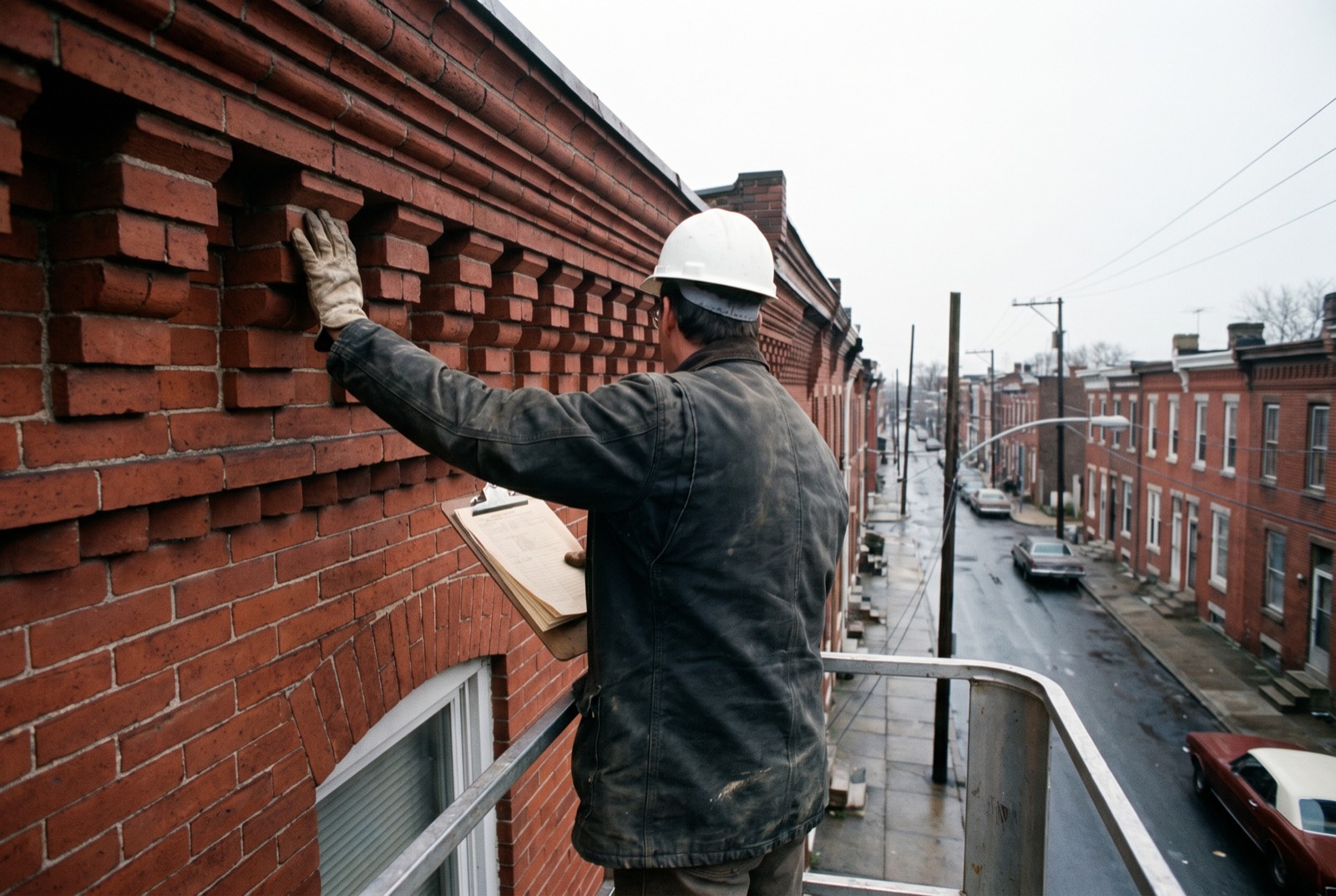
A cornice inspection is an engineer's written assessment of the projecting band at the top of a wall, the parapet above it, and the masonry behind both. For owners of older St. Louis brick buildings, it answers a question the street view cannot: whether the top of the wall is sound or slowly coming apart.
Own an older brick building? See how our cornice inspection works. Scapular Engineering is a licensed Professional Engineering firm in St. Louis.
What does a cornice inspection actually look at?
It looks at the whole top of the wall as one system. That means the cornice itself, the parapet and its cap, the flashing where roof meets wall, and the masonry just below. The engineer identifies what the cornice is made of, because corbelled brick, terra cotta, stone and pressed metal each fail in their own way.
The goal is a cause, not a list of cracks. Water is behind most of what goes wrong up there, and the visible damage often sits some distance from where the water got in. Our partner site explains how each cornice material is built and how it fails if you want the detail.
Why can't you judge this from the sidewalk?
Because much of what holds a cornice in place is hidden inside the wall. Anchors, ties and steel framing cannot be seen from the street, and they can corrode while the surface still looks fine. A piece can look sound while the fastening behind it is not.
The ground does tell you something. Missing pieces, a leaning parapet, rust streaks and debris on the sidewalk are all worth noting. The guide to signs a cornice or parapet is unsafe lists what to watch for, safely, from below. Do not climb up or pull at anything to test it.
When does an owner of an old brick building need one?
An inspection makes sense in several situations:
- You have noticed something from the ground, such as cracks near the top, a bowed parapet or stains running down the wall.
- Material has fallen, even a small piece.
- You are preparing to repair the roof, re-point the facade or sell the building.
- You inherited or bought the building and do not know the history of the top of the wall.
- A tenant, neighbor, insurer or city office has raised a concern.
None of these proves a problem exists. They are reasons to find out, in writing, before a small defect becomes an expensive or dangerous one.
What do you get at the end?
A written report. It describes what was observed, what condition the cornice and wall appear to be in, the likely cause of any damage, and what should happen next. That may be monitoring, a targeted repair or a fuller investigation. It can also document that nothing urgent was found, which is useful to hold on file.
The report does not sell or perform repairs. Because the engineer has no work to bid, the recommendation is not shaped by what a crew would like to build. If repairs are needed, the same findings can become a written scope that contractors price against. The service page for a cornice condition assessment describes the process in more detail.
What if something is already loose?
Keep people away from the area below, and leave anything that has fallen where it landed. Photograph from a safe distance and call for help rather than investigating. If material has already come down, a separate fallen masonry assessment is built for that situation.
What should you gather first?
You do not need much to start a conversation:
- The address and a few photos taken from the ground or across the street.
- Any earlier reports, repair invoices or bids.
- Any correspondence with the city about the building.
- A note on what prompted the question.
Older buildings often come with partial records, and that is normal. The engineer works with what exists and says what is still unknown.
Where do you start?
Read the overview on our cornice inspection page, then send the address and photos. The condition assessment on stlcornice.com is the place to see exactly what is included.
Need help with a property requirement?
Tell us what your lender, insurer, or project team needs so we can discuss your next step.