Should You Repair the Parapet Before a Roof Replacement?
In this guide
Yes, in most cases the parapet and chimney masonry should be evaluated before the roof is replaced, or at least planned together with it. The two meet at the roof edge, and if one trade finishes before the other has started, the second can damage or undo the first.
Planning a re-roof on an older building? See how our cornice inspection works.
Why do the roof and the parapet depend on each other?
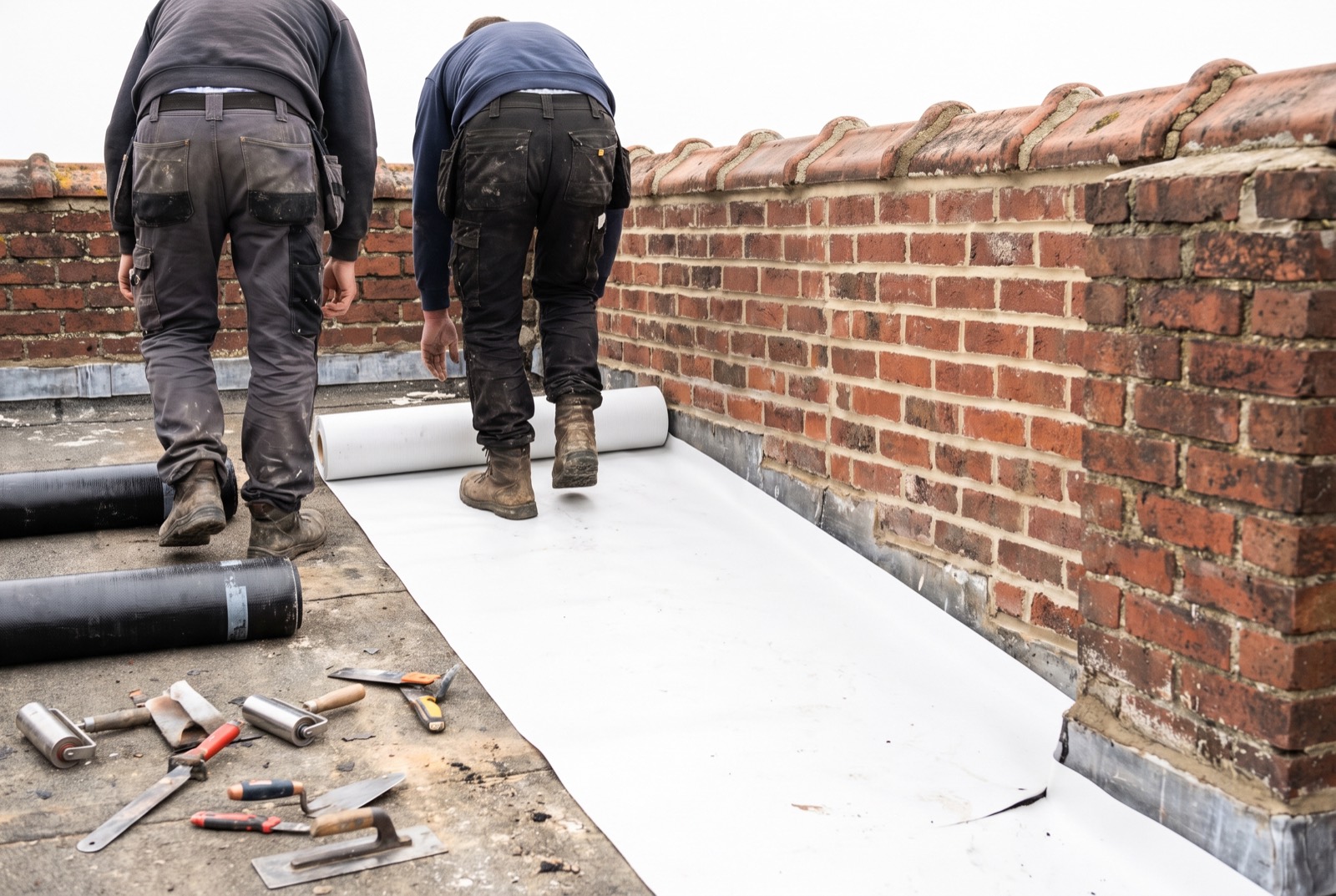
The roof membrane ends at the parapet wall, where flashing seals the joint between the two. The cap on top of the wall, called coping, keeps rain out of the masonry. If the flashing fails, water runs into the wall. If the wall is loose or its cap is cracked, water gets behind the roofing no matter how new it is.
Each side protects the other. A fresh roof against a deteriorating parapet leaves a new flashing detail attached to a wall that may move or crumble. The partner guide on parapet walls on old St. Louis buildings explains why these walls are exposed on every side.
How can one trade undo the other?
A few common ways:
- The roofer installs new flashing into joints that a mason later repoints or rebuilds, disturbing the flashing.
- The mason rebuilds the top of the wall after the new roof is down, and falling debris or scaffold loads damage the membrane.
- Roof crews stage materials and walk near an unstable parapet edge, which is a hazard to the workers.
- Repairs are done in the wrong order, so finished roof details have to be redone.
None of this requires anyone to be careless. It happens when two scopes are written separately with no one coordinating the meeting point.
What does an engineer add to the plan?
An engineer evaluates the parapet, its coping and flashing, the cornice below and the wall behind, then sets down in writing what masonry work is needed and how it relates to the roof. The parapet and chimney evaluation ends in a report with a repair scope that both the roofer and the mason can work from.
Chimneys above the roofline are exposed in a similar way, and they are usually included. They often sit in the middle of the roof, where a re-roof will work right around them.
Does a new roof fix a parapet problem?
Not always. Roof work can help stop water entering, but if the wall itself is loose or the anchors have rusted, it still needs attention. Roofers and masons each see part of the problem, so the cause is worth diagnosing first.
What can you check from the ground?
Look from the sidewalk or from across the street, and do not go onto the roof. Concerns include a parapet that leans or bows, open joints near the top, loose or missing coping, rust stains or white deposits running down the wall, and brick or mortar debris below. Any of these is a reason to ask before the roof bids come in.
How should the sequence work?
- Have the parapet and chimneys assessed before roofing bids are requested.
- Share the resulting scope with both the roofer and the mason.
- Decide together which work comes first and who protects what.
- Ask the city's building and historic-preservation offices what applies at your address.
If masonry repairs are likely, they usually belong before or alongside the roof work, not after it.
What if the roof contract is already signed?
Raise it now. Ask the roofer whether the contract covers the parapet, coping and chimneys, and whether any of that is excluded. An evaluation takes less time than undoing finished work.
Where do you start?
Read about our cornice inspection service, then send the address and photos from the ground. When you also need the written repair plan, the cornice repair scope is the document the contractors will bid from.
Need help with a property requirement?
Tell us what your lender, insurer, or project team needs so we can discuss your next step.